

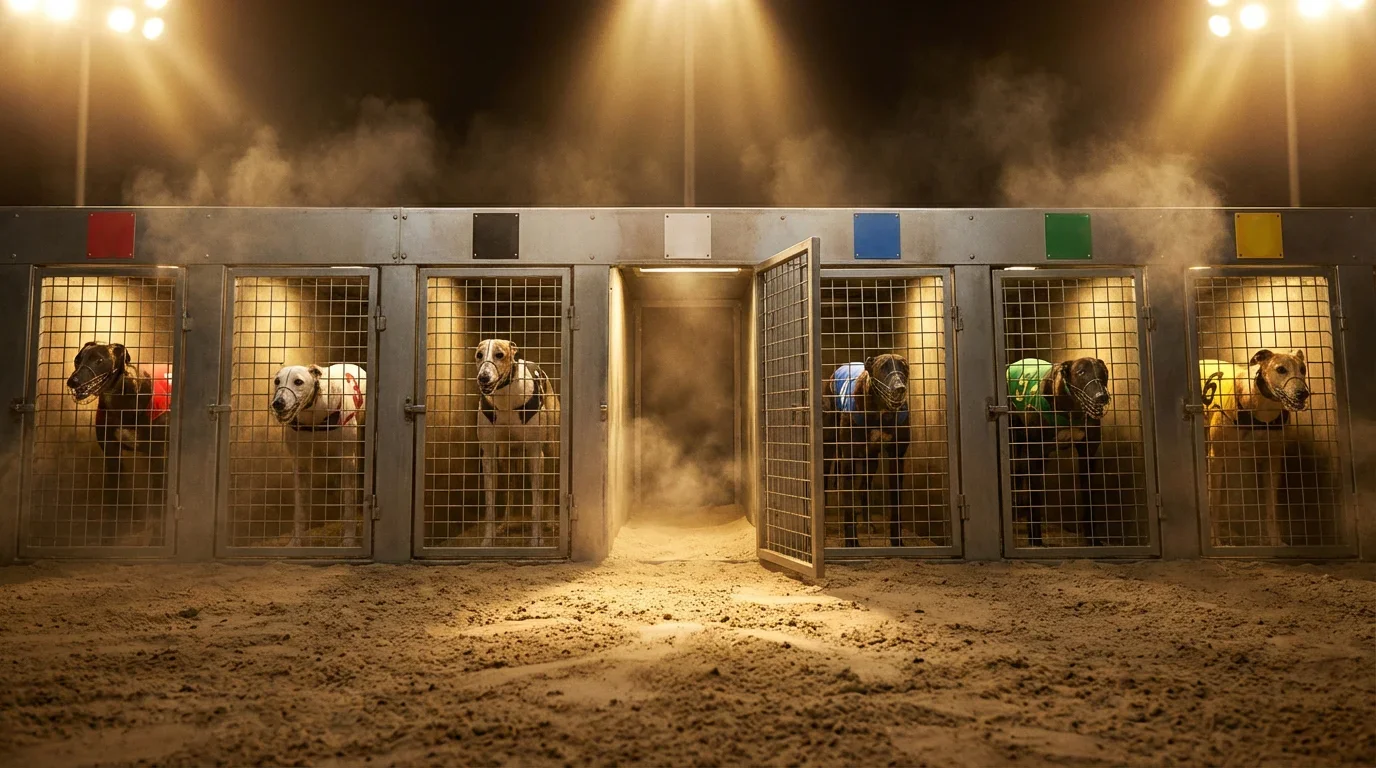
The Empty Trap That Changes Everything
You have done the work. Studied the racecard, assessed the trap draw, compared the form. Then, fifteen minutes before the off, one of the six runners is withdrawn. The trap sits empty. The race shape changes. Your bet, carefully built on a six-dog analysis, is now operating in a five-dog race with different dynamics — and depending on the type of bet you placed, the withdrawal may alter your expected return, void your wager entirely, or replace your selection with a dog you never intended to back.
Non-runners are an unavoidable part of greyhound racing. Dogs fail veterinary inspections at the track, suffer minor injuries during the pre-race kennel period, or are withdrawn by trainers for reasons that may not become public. The sport handles these withdrawals through a set of rules governing reserve substitutions, vacant traps, Rule 4 deductions, and bet settlement that every bettor needs to understand. Getting caught unaware by a non-runner is not a freak event — it is a regular occurrence that the prepared punter factors into their process.
This guide covers what happens when a greyhound is withdrawn, how reserve runners and vacant traps work, and the specific impact on different types of bets.
Find more betting rules at greyhoundresultstoday.
What Happens When a Dog Is Withdrawn
When a greyhound is withdrawn from a race after final declarations, the racing office at the track has two options: introduce a reserve runner or leave the trap vacant. The decision depends on timing, availability, and the specific rules of the meeting.
If the withdrawal occurs with enough notice — typically before the racing office’s cutoff for reserve introductions — a reserve dog may be inserted into the vacated trap. Reserve runners are declared alongside the main runners for each race, usually two reserves per race. They are dogs that are ready to race but were not selected for the original six-runner field. When a reserve is called up, it takes the withdrawn dog’s trap number and position. This is important: the reserve inherits the trap, not the withdrawn dog’s form, odds, or running style. The reserve may be completely different in pace profile, ability, and distance preference.
If the withdrawal occurs too close to race time for a reserve to be prepared — or if no suitable reserve is available — the trap is left vacant. The race proceeds with five dogs and an empty box. The remaining dogs run in their original traps; there is no reshuffling of trap positions to fill the gap. A vacant trap changes the race dynamics, particularly through the first bend. If trap three is empty, the dogs on either side — traps two and four — have more room to navigate the first bend, which can be a meaningful advantage on tight tracks where first-bend crowding typically determines the outcome.
The timing of the announcement matters for bettors. Late withdrawals — those confirmed after the betting market has formed — trigger Rule 4 deductions on winning bets at fixed odds. Early withdrawals, where the market has time to adjust before significant money is traded, may not require a Rule 4 adjustment because the odds already reflect the reduced field. In practice, most greyhound withdrawals that affect punters occur in the final hour before a race, when the market is already set and Rule 4 is the mechanism for correction.
One scenario that catches punters off guard is the withdrawal of their own selection. If you backed a dog and it is subsequently withdrawn, your bet is void and your stake is returned — provided you bet on the specific named dog. This is straightforward for online betting, where the bet slip records the dog’s name. It becomes more nuanced with trap-based betting, which is covered in the next section.
Reserve Runners — Trap vs Named Dog Bets
The distinction between a trap bet and a named-dog bet is the single most important thing to understand about non-runners in greyhound racing. It determines whether your bet is voided, replaced, or settled as originally placed when a withdrawal occurs.
A named-dog bet is placed on a specific greyhound by name. If that dog is withdrawn, the bet is void and your stake is returned. Most bets placed through online bookmaker platforms are named-dog bets — when you click on a selection in the racecard, you are backing “Droopys Jet” or “Ballymac Flash,” not “the dog in trap 4.” This gives you full protection against non-runners: if your dog does not run, you get your money back.
A trap bet is placed on whichever dog occupies a particular trap number. If the original dog is withdrawn and a reserve takes its place, your bet stands — but it now applies to the reserve runner, not the dog you originally assessed. This is the scenario that causes confusion and frustration. You analysed the form of the original trap occupant, decided it was a good bet, and placed your wager. A withdrawal occurs, a reserve is inserted, and your bet is now on a completely different dog that you may know nothing about. Trap bets do not void when a reserve replaces the withdrawn runner, because the trap itself is still active.
In betting shops, the distinction between trap and named-dog bets can be ambiguous. If you write “trap 4” on a slip, you have placed a trap bet. If you write the dog’s name, you have placed a named-dog bet. Online platforms generally default to named-dog bets, but check the terms of your specific bookmaker — some treat all greyhound bets as trap bets unless the dog’s name is explicitly recorded. The safest practice is to always ensure your bet slip references the dog’s name, not just the trap number.
Forecast and tricast bets add another layer. If one of your selected dogs is withdrawn and replaced by a reserve, the treatment depends on whether you placed a named-dog forecast or a trap forecast. Named-dog forecasts are voided if any named selection is withdrawn. Trap forecasts run with whatever dogs occupy the traps at race time, including reserves. Some bookmakers default to trap-based forecasts on greyhounds — a policy that is not always clearly communicated. If you regularly place forecast bets, confirm your bookmaker’s policy before you discover it the hard way.
Empty Traps and Void Races
When a trap is left vacant — no reserve available or the withdrawal happened too late — the race runs with fewer than six dogs. Five-runner races are uncommon but not extraordinary. The impact on race dynamics is tangible. The dogs adjacent to the empty trap benefit from reduced crowding at the first bend. If the vacant trap is on the inside — trap one or two — the remaining inside runners have a cleaner path to the rail. If it is on the outside — trap five or six — the wide runners have more room to settle into their racing line without being squeezed.
For bettors, a vacant trap is a variable that the pre-race form analysis did not account for. The dog you expected to be crowded at the first bend now has a clear run. The front-runner you feared would be challenged for the lead no longer faces that particular rival. Reassessing the race in light of a vacant trap is not optional — it is the difference between betting on the race that was declared and betting on the race that is actually being run.
A race can be declared void if the number of runners falls below a minimum threshold, though this is rare in UK greyhound racing. The minimum number of runners required varies by racing authority and meeting type, but a race with fewer than four dogs is generally subject to voiding. If a race is voided, all bets are returned as void regardless of type. This is the cleanest outcome for bettors — no Rule 4, no confusion about reserves, just money back — but it happens infrequently because the reserve system is designed specifically to prevent races from falling below viable runner numbers.
Multiple withdrawals from the same race create compounding effects. Two non-runners from a six-dog race leave a four-runner contest that barely resembles the original card. Rule 4 deductions apply for each withdrawal independently, and the combined deduction can be substantial. If the second favourite and a mid-range dog both withdraw, the total Rule 4 deduction might reach 40 to 50 pence in the pound — a significant chunk of your expected profit on any winning fixed-odds bet. In races with multiple withdrawals, SP bets become relatively more attractive because the starting price already reflects the depleted field.
The Non-Runner Edge
Non-runners are inconvenient, but they also create opportunities for the punter who reacts quickly and thinks clearly. When a dog is withdrawn, the market adjusts — but it does not always adjust perfectly. Bookmakers shorten the remaining runners’ odds and apply Rule 4, but the recalibrated prices sometimes fail to account for the changed race dynamics. The dog that benefits most from a vacant trap — typically the one drawn adjacent to it, or the one that was expected to encounter the withdrawn dog at the first bend — may not shorten as much as it should.
This edge is small and situational, but it rewards punters who understand track geometry and first-bend dynamics well enough to quickly reassess a race when a non-runner is announced. If trap three is vacant at a track where traps two and three typically crowd each other into the first bend, the dog in trap two has just gained a measurable advantage that the market may not fully price in.
Also read our rule 4 deductions.
The broader lesson is preparedness. Check for non-runners before every race, not after you have placed your bet. Most bookmaker apps and the GBGB results service flag withdrawals in real time. Building a thirty-second non-runner check into your pre-bet routine eliminates the surprise factor entirely. You will never be caught backing a dog that is not running, never discover a reserve has replaced your selection after the fact, and never miss the opportunity to reassess a race where a withdrawal has changed the tactical picture in your favour.
