

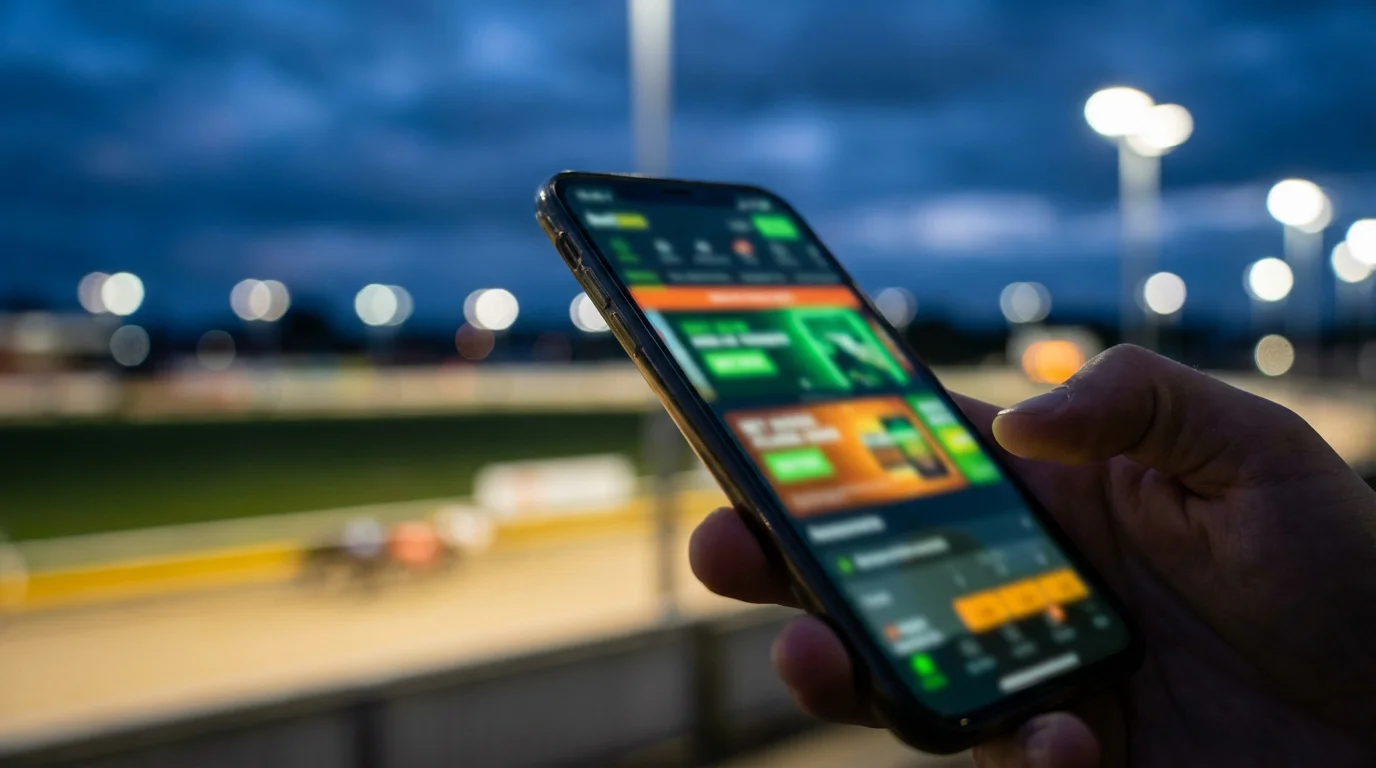
The Bookmaker’s Welcome Mat
UK bookmakers spend millions annually on promotions, and greyhound racing, though smaller than football or horse racing in market share, receives its portion of that spend. Free bets, enhanced odds, money-back offers, and Best Odds Guaranteed deals appear across most major betting platforms, and for the greyhound punter who understands how to use them, they represent a genuine source of additional value. For the punter who does not, they are a marketing mechanism designed to increase betting volume — which benefits the bookmaker, not you.
The distinction between these two outcomes is not cynicism. It is reading comprehension. Every promotion comes with terms and conditions that define exactly what you receive, what you must do to qualify, and what restrictions apply. The punter who reads the terms and uses the offer selectively adds value to their bankroll. The punter who clicks “claim” without reading the small print often ends up placing bets they would not otherwise have made, at stakes they would not otherwise have risked, on races they would not otherwise have considered — all to unlock a reward that may not cover the cost of qualifying.
This guide covers the main types of greyhound betting promotions available from UK bookmakers, how to extract genuine value from free bets, and the specific offers that greyhound punters should prioritise.
Find more bonus guides at greyhoundresultstoday.
Types of Greyhound Promotions
Sign-up offers are the most visible promotions and typically the most generous. A new customer opens an account, places a qualifying bet, and receives a free bet or bonus credit. The qualifying bet may need to be at minimum odds, on a specific market, or settled within a certain timeframe. For greyhound bettors, the key question is whether greyhound bets qualify. Not all sign-up offers include greyhounds — some restrict the qualifying bet to football or horse racing. Check the terms before assuming a headline offer applies to the dogs.
Existing customer promotions are where the ongoing value lives. These include daily or weekly offers that rotate across the bookmaker’s platform and occasionally focus specifically on greyhound racing. Common formats include: extra place races, where the bookmaker pays out on an additional place in forecast or each way markets; acca boosts, where the bookmaker adds a percentage to accumulator winnings; money-back specials, where your stake is refunded as a free bet if your selection finishes second to the favourite; and enhanced odds, where the bookmaker offers a boosted price on a specific dog or outcome, usually capped at a low stake.
Loyalty programmes and VIP schemes at some bookmakers provide ongoing benefits — higher BOG limits, exclusive free bets, reduced commission on exchange platforms. These are typically offered to active customers who bet regularly, and the value scales with volume. For a punter who bets on greyhounds several times a week, a loyalty programme that provides a weekly free bet or enhanced terms on specific markets can add meaningful value across a year. For an occasional bettor, the effort of qualifying rarely justifies the reward.
Referral bonuses, where existing customers receive a reward for introducing new customers, are a peripheral source of value but worth noting. If you know other greyhound punters who are not yet registered with a specific bookmaker, the referral bonus provides value to both parties at no cost — provided the referred customer is genuinely interested in the platform and not just signing up to unlock your bonus.
Using Free Bets Effectively
Free bets are the most common promotional currency in UK betting, and using them effectively requires understanding their mechanics. A free bet is a wager placed with the bookmaker’s money rather than your own. If the free bet wins, you receive the profit but not the stake — the stake was never yours. If the free bet loses, you lose nothing because you risked nothing. This “stake not returned” structure means the expected value of a free bet is lower than its face value. A ten-pound free bet is not worth ten pounds — it is worth roughly the profit you would expect from a ten-pound bet at the odds you use it at.
The implication for how you use free bets is straightforward: use them at the longest odds you can reasonably justify. A ten-pound free bet on a 1/2 favourite returns five pounds profit if it wins — a 50 percent expected return assuming the favourite wins half the time. The same ten-pound free bet on a 5/1 shot returns fifty pounds profit if it wins — a higher expected value in absolute terms, assuming the 5/1 shot wins at roughly its implied probability. Free bets are more valuable at longer odds because the profit, when it comes, is larger relative to the notional stake you did not actually risk.
This does not mean you should waste free bets on hopeless outsiders. A free bet on a 20/1 shot that has no realistic chance of winning is still a losing proposition. The optimal use is to find a genuine value selection — a dog you would consider backing with your own money at those odds — and place the free bet there. You get the benefit of the overlay and the benefit of the free stake simultaneously. If the dog wins, the return is substantial. If it loses, the cost is zero.
One tactical point: some bookmakers allow free bets to be used on exchange markets. If available, using a free bet to back a selection on the exchange at a higher price than the bookmaker offers, then laying at a shorter price to lock in a guaranteed profit, is a legitimate way to convert a free bet into cash. The profit is smaller than an outright winning bet would produce, but it is certain rather than probabilistic. This approach is widely used by matched bettors and is legal and within the terms of most bookmaker promotions, though specific platform rules should always be checked.
BOG, Money-Back, and Enhanced Odds
Best Odds Guaranteed is the single most valuable ongoing promotion for greyhound bettors, and it deserves special attention. When a bookmaker offers BOG on greyhounds, they guarantee that if the starting price is higher than the price you took, you receive the starting price instead. You take 3/1 in the morning; the SP drifts to 4/1; you are paid at 4/1. The reverse does not apply — if the SP shortens to 2/1, you keep your 3/1. BOG removes the risk of taking an early price and being punished when the market moves in your favour. It is free upside with no downside, and any bookmaker that offers it on greyhounds should be at the top of your list.
Not all bookmakers offer BOG on greyhound racing. It is standard on horse racing across most major platforms, but greyhound coverage is less consistent. Some bookmakers offer BOG on selected meetings only — typically the major evening cards at bigger tracks — while excluding afternoon or smaller-track fixtures. Others exclude greyhound BOG entirely. The bookmakers that do offer comprehensive BOG on greyhounds signal a genuine commitment to the product, and the long-term value of that commitment is substantial. Over a year of regular betting, BOG adds several percentage points to your overall returns at no additional cost or effort.
Money-back promotions on greyhound racing typically take the form of “money back as a free bet if your dog finishes second” or “money back if the favourite wins.” These offers provide a partial safety net on losing bets, but the value is conditional — it only kicks in under specific circumstances, and the refund is usually in free-bet credit rather than cash. Evaluate money-back offers by asking how often the trigger condition occurs. “Money back if your dog finishes second to the favourite” triggers less frequently in a six-dog race than it would in a horse race with fifteen runners, because there are fewer runners between you and the winner. The expected value is lower than it first appears.
Enhanced odds promotions — where a bookmaker offers, say, 10/1 on a specific dog that is actually 3/1 in the market — are attention-grabbing but typically capped at small stakes, often just one or two pounds. The enhanced payout if the dog wins is attractive, but the restriction to a nominal stake limits the practical impact on your bankroll. Claim enhanced odds when they align with a selection you would make anyway, but do not let a headline price drive you into a race you would otherwise ignore. The bookmaker offers enhanced odds to bring you to the platform and encourage additional bets at regular prices — the enhanced price is the bait, not the meal.
Offers Fund the Bankroll, Not the Strategy
The correct way to think about promotions is as a supplementary income stream that sits alongside your core betting process, not as a replacement for it. Free bets add to your bankroll. BOG improves your returns. Money-back offers reduce the cost of losing bets. But none of these change whether your selection method is sound. A profitable bettor who uses promotions is more profitable than the same bettor without them. An unprofitable bettor who uses promotions is still unprofitable — just slightly less so.
The danger of promotion-chasing is that it distorts your betting behaviour. Bookmakers design promotions to generate activity: they want you to bet more often, at higher stakes, on markets you might not otherwise consider. If a promotion leads you to bet on a race you have not analysed, at odds you have not assessed, with a stake that exceeds your normal plan — the promotion has worked for the bookmaker, not for you. Use offers that align with bets you would already make. Ignore offers that require you to deviate from your process.
Also read our greyhound best odds guaranteed.
Treat promotional value as found money. Add free-bet profits to your bankroll. Let BOG windfalls accumulate in your balance. Track promotional income separately from your core betting results so you can see how much your promotions are genuinely worth over time. For a regular greyhound bettor who actively manages multiple bookmaker accounts, promotional income can add 5 to 10 percent to annual returns — a meaningful margin that costs nothing except attention and organisation.
