

Every Track Has a Tell
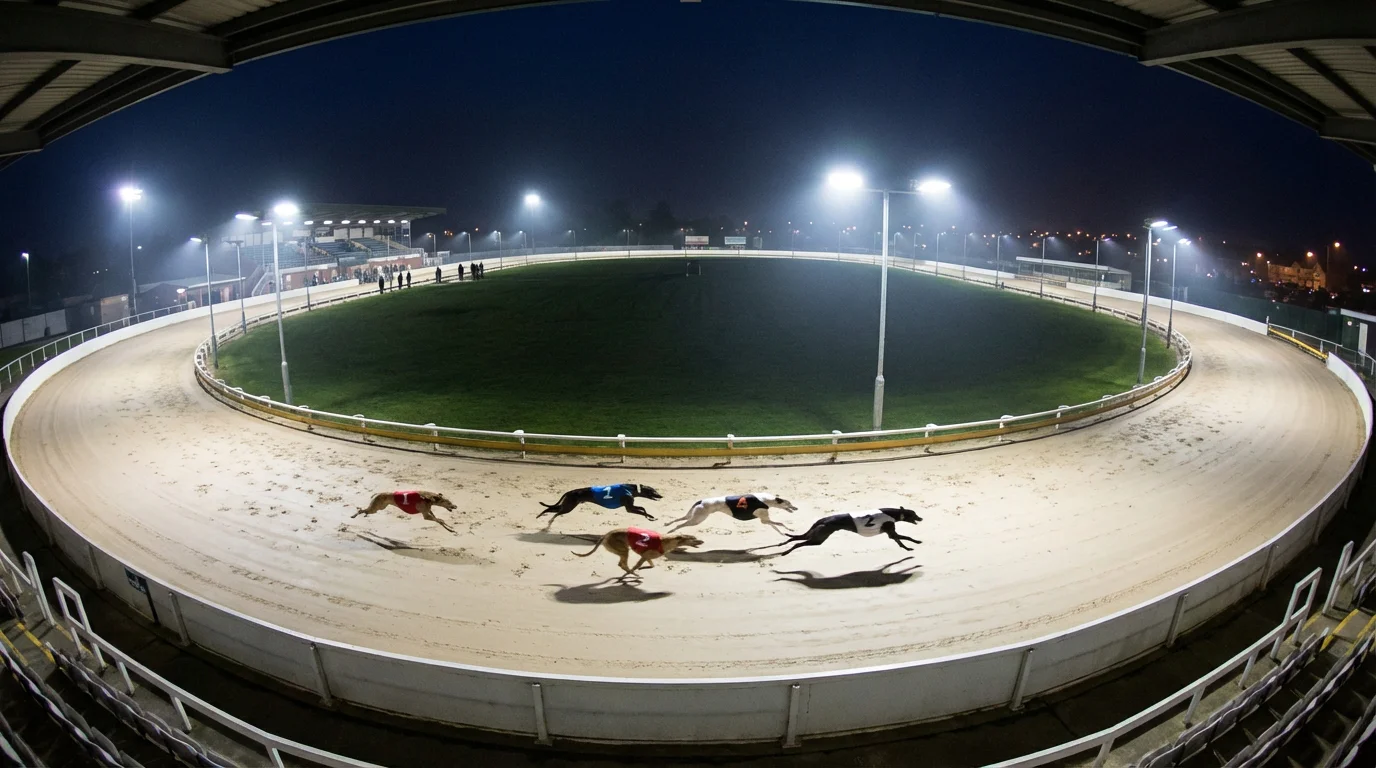
Know the track and you’ll know which dogs to trust — and which prices to take. Greyhound racing is not a homogeneous sport. The experience of watching a 480-metre race at Romford, where the first bend arrives almost before you’ve drawn breath, is fundamentally different from the same distance at Nottingham, where the wide galloping circuit gives runners room to find their positions. The surface, the geometry, the trap layout, the hare system, the crowd, the atmosphere — all of it varies from one venue to the next, and all of it affects outcomes.
For bettors, track knowledge is one of the most accessible edges available. Unlike form analysis, which requires studying dozens of dogs and their histories, track knowledge is a fixed body of information that doesn’t change between meetings. Learn that Trap 1 at a particular venue wins significantly more than its fair share of races over the sprint distance, and that knowledge serves you every time you bet there. Build a picture of how each track’s bends favour inside or outside runners, and you have a structural filter that improves every selection you make.
This guide profiles the current UK licensed greyhound tracks, covers the major venues that host the sport’s biggest events, surveys the regional circuits, and explains what practical factors you should check at any track before committing money. Whether you’re a dedicated follower of a single venue or a punter who bets across the full card, understanding the ground beneath the dogs’ feet is where serious betting begins.
Get more track info at greyhoundresultstoday.
The Current UK Track Landscape
The UK currently has 18 GBGB-licensed greyhound stadiums, spread across England and Wales. That number represents a significant contraction from the sport’s peak — in the 1940s, there were seventy-seven licensed tracks and over two hundred independent ones, with thirty-three in London alone. The consolidation has been steady over decades, driven by rising land values, competition from other entertainment, and shifting public attitudes towards animal sports.
What remains, though, is a functioning national circuit that races almost every day of the year. The licensed tracks operate under GBGB regulation, which means standardised rules, veterinary oversight, welfare requirements, and drug testing. For bettors, the regulated sector offers a level of integrity and data transparency that makes informed wagering possible. Results, starting prices, and race details are published through the GBGB and third-party platforms like Timeform and Sporting Life, giving punters a reliable information base.
The geographic distribution is weighted towards England, with the heaviest concentration in London, the South East, and the Midlands. The north has a smaller but established presence, anchored by venues like Newcastle and Sunderland. Wales retains a single licensed track, although the Welsh Government has signalled its intention to phase out greyhound racing in the country. Scotland’s last licensed track at Shawfield effectively closed in 2020 during the COVID-19 pandemic and never reopened, leaving no GBGB-regulated racing north of the border. Northern Ireland operates under a separate regulatory body, the Irish Coursing Club, and is not covered by GBGB rules.
The tracks divide broadly into those owned by major operators — Arena Racing Company controls several venues and handles media rights distribution — and independently operated stadiums. The corporate-owned tracks tend to have more consistent facilities, media coverage, and bookmaker integration, while the independents often have a stronger local character and, in some cases, more distinctive racing conditions. For betting purposes, the ownership structure matters less than the physical characteristics of the track itself, but it’s worth knowing because media rights agreements determine which bookmakers stream which meetings, and access to live racing footage is a significant analytical advantage.
Meeting frequency across the circuit means racing is available almost every day of the week. Most tracks host two or three meetings weekly, with a mix of evening and daytime cards. The Bookmakers’ Afternoon Greyhound Service — commonly known as BAGS — provides the backbone of the daytime schedule, running morning and early afternoon meetings that feed into the fixed-odds and exchange betting markets. Evening meetings typically draw stronger fields and bigger crowds, but the daytime BAGS cards offer their own opportunities for punters willing to study the less glamorous end of the fixture list.
Major Track Profiles — The Big Meetings
These are the tracks where the biggest races happen and the most money moves. The English Greyhound Derby, the St Leger, the Oaks — these Category One events draw the best dogs from across Britain and Ireland, and the tracks that host them occupy a central position in the sport’s calendar. Understanding these venues is essential even if you don’t bet on open-race events, because the quality of racing at these stadiums sets the standard against which form from other tracks should be measured.
Towcester — Home of the Derby
Towcester Greyhound Stadium, set within the wider Towcester Racecourse complex in Northamptonshire, is the current home of the English Greyhound Derby — the sport’s most prestigious event. The track opened in 2014 and has hosted the Derby since 2021, with the 2025 edition sponsored by Star Sports and Towcester Racecourse Company (TRC), carrying a winner’s prize of 175,000 pounds.
The track has a 420-metre circumference with wide, sweeping bends that make it a genuine galloping circuit. Distances available include 260, 480, 500, 655, 686, and 906 metres, giving it one of the broadest distance ranges of any UK venue. The wide bends are a defining characteristic — they reduce the first-bend crowding that plagues tighter tracks, meaning running style and raw ability are rewarded more than trap position alone. For bettors, this translates to a more predictable racing surface where form tends to hold up better than at sharper venues. Dogs with proven pace and stamina over the Derby distance of 500 metres are the ones to follow at Towcester.
Nottingham — The St Leger Venue
Nottingham Greyhound Stadium sits within the Colwick Park racecourse complex, two miles from the city centre. It’s another large, galloping track with a 437-metre circumference and distances that include 305 and 500 metres. The stadium hosted the St Leger in 2025 and stages several other prestigious open events throughout the year, including the Select Stakes, the Eclipse, and the Puppy Classic.
Nottingham’s character is defined by its long straights and generous bends. The track favours dogs with sustained pace rather than pure early speed, and the wider configuration means outside traps are less disadvantaged than at many other UK venues. Regular meetings run on Monday and Friday evenings, with additional daytime cards midweek, providing a consistent flow of data for punters who want to specialise. The East Midlands location makes it accessible from across the country, and it draws a strong pool of runners from a wide catchment of training kennels.
Romford — Fast and Furious
Romford Greyhound Stadium in East London is the antithesis of the big galloping tracks. It’s a tight, fast circuit where the first bend arrives quickly and early pace is king. The standard distance is 400 metres, shorter than the 480-metre trips common elsewhere, and the compact layout means trap draw matters enormously. Inside traps hold a significant advantage at sprint distances because the rail position gives the dog in Trap 1 the shortest route into the first bend.
For bettors, Romford is a track that rewards specialisation. The tight geometry amplifies the difference between dogs that break well and those that don’t, and the trap bias data is among the most pronounced in UK racing. If you’re going to develop deep track knowledge anywhere, Romford’s sharp idiosyncrasies make it a rewarding study — but the same sharpness means that general form from other venues transfers poorly. A dog that looked impressive at Nottingham might struggle at Romford simply because the track demands a different kind of runner.
London and South East Tracks
London’s greyhound scene isn’t what it was — but what’s left still draws serious action. The capital once had more than thirty tracks; now it’s down to a handful, but those that remain are among the busiest and most-watched in the country. Romford, already profiled above, is the flagship. The South East cluster also includes Central Park in Sittingbourne, Kent, which races regularly and attracts strong fields from the southern training colonies. Crayford, previously a key London-area venue, closed permanently in January 2025 after its owners Entain determined the operation was no longer viable.
Central Park is a medium-sized track in Sittingbourne that offers a mix of sprint and middle-distance racing. It’s less extreme than Romford in its trap bias but still favours runners with early pace at the shorter trip. The longer distances give closers a chance, making it a more versatile venue for bettors who prefer not to rely entirely on trap draws.
Hove, on the Sussex coast, is another track worth knowing. It races regularly and has a loyal following among southern punters. Its track configuration produces competitive racing across multiple distances, and the training colonies in the south of England ensure a steady supply of quality runners. Further west, Poole provides racing on the Dorset coast — a smaller operation but one with its own local character and a set of track conditions distinct from the bigger London venues.
The South East tracks benefit from dense bookmaker coverage and reliable live streaming through SIS and third-party feeds. Most major bookmakers stream meetings from these venues, which means you can watch races live and build your own visual record of how dogs run — an invaluable supplement to form data. The frequency of meetings at these tracks also means a steady supply of form data, making it practical to maintain detailed records and spot trends over relatively short timeframes.
For punters based in or around London, the concentration of tracks within an hour’s drive makes it feasible to attend meetings in person. Trackside observation — watching how dogs behave in the parade ring, how they enter the traps, how they handle the bends — provides information that no racecard or result sheet can capture. It’s a diminishing advantage in an era of live streaming, but it’s still real.
Northern and Midlands Tracks
From Newcastle down to the West Midlands, the northern circuit has a character all its own. These tracks tend to be less fashionable than their London counterparts but no less competitive, and the betting markets on northern meetings can be thinner, which sometimes creates value opportunities that don’t exist on more heavily traded cards.
Newcastle is the northernmost GBGB track and one of the most active, hosting regular evening meetings and a strong calendar of open races. The stadium’s location means it draws runners from a distinct northern training pool, and the form generated at Newcastle doesn’t always translate directly to southern tracks and vice versa. For bettors, this regional isolation is an advantage if you specialise — the dog population is consistent enough to build deep familiarity without needing to track runners across dozens of venues.
Sunderland, Sheffield, and Doncaster form a northeast and Yorkshire cluster. Each has its own track dimensions and character. Sheffield, for example, is a sharp track that can produce lively results, while Doncaster’s layout offers a more standard racing experience. Perry Barr in Birmingham was historically the Midlands’ premier greyhound venue, hosting the St Leger for decades. Perry Barr closed in August 2025 and racing relocated to the new Dunstall Park Greyhound Stadium at Wolverhampton Racecourse, which opened to the public on 19 September 2025 under the Arena Racing Company umbrella. Monmore Green, also in the Wolverhampton area, is a well-established track known for its competitive graded racing and an active open-race programme.
Further north, Kinsley provides racing in West Yorkshire, and Belle Vue — one of the sport’s legendary names, with a history stretching back to the earliest days of British greyhound racing — continues to operate in Manchester. The northern tracks share a certain no-nonsense quality: smaller crowds than the London circuit, less media attention, but racing that is often every bit as competitive. The pools of training talent in the north produce dogs that regularly compete in Category One events nationwide, so the quality shouldn’t be underestimated.
The Midlands tracks — Monmore, the new Wolverhampton venue, and others in the region — benefit from their central location, which attracts runners from both northern and southern training colonies. This can produce open, competitive fields where the market is harder to read but where value is available for punters who understand the track conditions. If you follow the Midlands circuit, pay particular attention to dogs switching between venues in the region — a dog that’s been running at one track and appears at a neighbouring venue often represents a deliberate trainer decision that can signal a positive or negative assessment of the dog’s current condition.
What to Check at Any Track Before Betting
Before you bet, answer four questions about the track. What are the current trap statistics? What distances are available and what’s being raced tonight? What’s the surface condition? And what’s the grading structure? These aren’t complicated checks, but they form the minimum level of track-specific preparation that separates an informed bet from a blind one.
Trap statistics should be reviewed for the specific distance being raced, not just the track overall. A venue might have a strong Trap 1 bias at 480 metres but a balanced or even outside-trap advantage at 640 metres, because the longer run to the first bend at the extended trip changes the dynamics. Most results platforms allow you to filter by distance, so use that filter. Data from the last three months is the most relevant — long-term averages can mask seasonal shifts caused by surface maintenance, weather patterns, or changes to the hare running line.
Surface Condition and Going Reports
UK greyhound tracks use sand-based surfaces, and the condition of the sand directly affects race times and outcomes. A freshly laid or well-maintained surface runs faster and produces more consistent times. An older surface, or one affected by heavy rain, runs slower and can alter the relative advantages of different running styles. Heavier going tends to blunt pure speed and reward dogs with stamina and a grinding running style.
Going reports for greyhound racing are less formalised than in horse racing — you won’t always find an official “good to soft” declaration. Instead, you need to use proxies: check the weather forecast for the track’s location on raceday, compare recent race times against historical averages to gauge whether the surface is running fast or slow, and note any track maintenance announcements from the GBGB or the venue itself. Some experienced punters track race times at their specialist venue over weeks, building a personal “going gauge” that flags when conditions have shifted.
Available Distances and Their Implications
Not every track offers every distance, and the distances available shape the type of racing and the type of dog that performs well at each venue. A track that races primarily at 480 metres favours versatile middle-distance dogs. A track with a strong sprint programme at 260 or 270 metres attracts sharp, quick-breaking specialists. A venue that offers staying trips of 640 metres and beyond draws a different kind of runner — one with the stamina to maintain pace over four or more bends.
For bettors, the distance menu tells you what kind of form to look for and which dogs are likely to be well suited. A dog with a brilliant sprint record may have no relevance to a 640-metre staying race, and a stayer moving down to a 480-metre trip may lack the early pace to be competitive against middle-distance specialists. Always check which distances are being used at the meeting you’re planning to bet on, and assess your selections against that specific trip rather than their overall form record.
Independent (Flapping) Tracks
Outside the GBGB system, a network of independent tracks — historically known as “flapping” tracks — once operated under different rules and with varying levels of oversight. These venues ran without central registration, licensing, or a formal code of practice. Standards were set by local government where they existed at all, and there was no governing body providing the kind of welfare and integrity framework that GBGB regulation ensures.
The independent sector has effectively disappeared. The last flapping track in England closed in March 2025, marking the end of a tradition that had been declining for decades. At its peak, independent racing drew large crowds and produced plenty of betting turnover, but the absence of regulation created persistent concerns about animal welfare, racing integrity, and the reliability of results data.
For bettors in 2026, the practical implication is straightforward: all regulated greyhound racing in Great Britain takes place under GBGB rules. This means standardised drug testing, veterinary oversight, published results, and a level of data transparency that makes informed betting possible. If you encounter references to independent or unregulated meetings — particularly online — be aware that the regulatory protections you rely on for betting analysis do not apply. The GBGB-licensed circuit is where the verifiable data lives, and it’s where your betting analysis should be focused.
Pick Your Ground — Then Pick Your Dog
Track knowledge doesn’t guarantee winners, but it eliminates the worst bets. That’s a distinction worth understanding, because it sets realistic expectations for what venue analysis can and can’t do. Knowing that Trap 6 at a particular track wins barely 10% of sprint races doesn’t tell you who will win — but it tells you who probably won’t, and that negative information is often more actionable than a positive prediction.
The best greyhound punters treat track knowledge as the first filter in their selection process, not the last. Before they look at form, before they study sectional times, before they assess price, they ask whether the race conditions — track, distance, surface — suit the type of dog they’re considering. If the answer is no, the rest of the analysis becomes irrelevant. A dog can have brilliant form and terrible prospects if the venue doesn’t suit its running style.
Also read our greyhound racing distances.
Building track knowledge takes time but not talent. Attend or watch meetings at your chosen venue, compile your own data, and observe how different types of dogs perform under different conditions. Within a few months, you’ll notice patterns that the general market doesn’t fully price in — and those patterns are the raw material from which a betting edge is built.
The eighteen GBGB tracks currently operating represent the entire regulated betting landscape for greyhound racing in Great Britain. Each one has its own personality, its own quirks, and its own stories to tell to a bettor who’s willing to listen. Pick the ground that suits you — geographically, temperamentally, analytically — and go deeper than anyone else. The surface-level punter sees a racecard. The track specialist sees the context behind every line on it.
